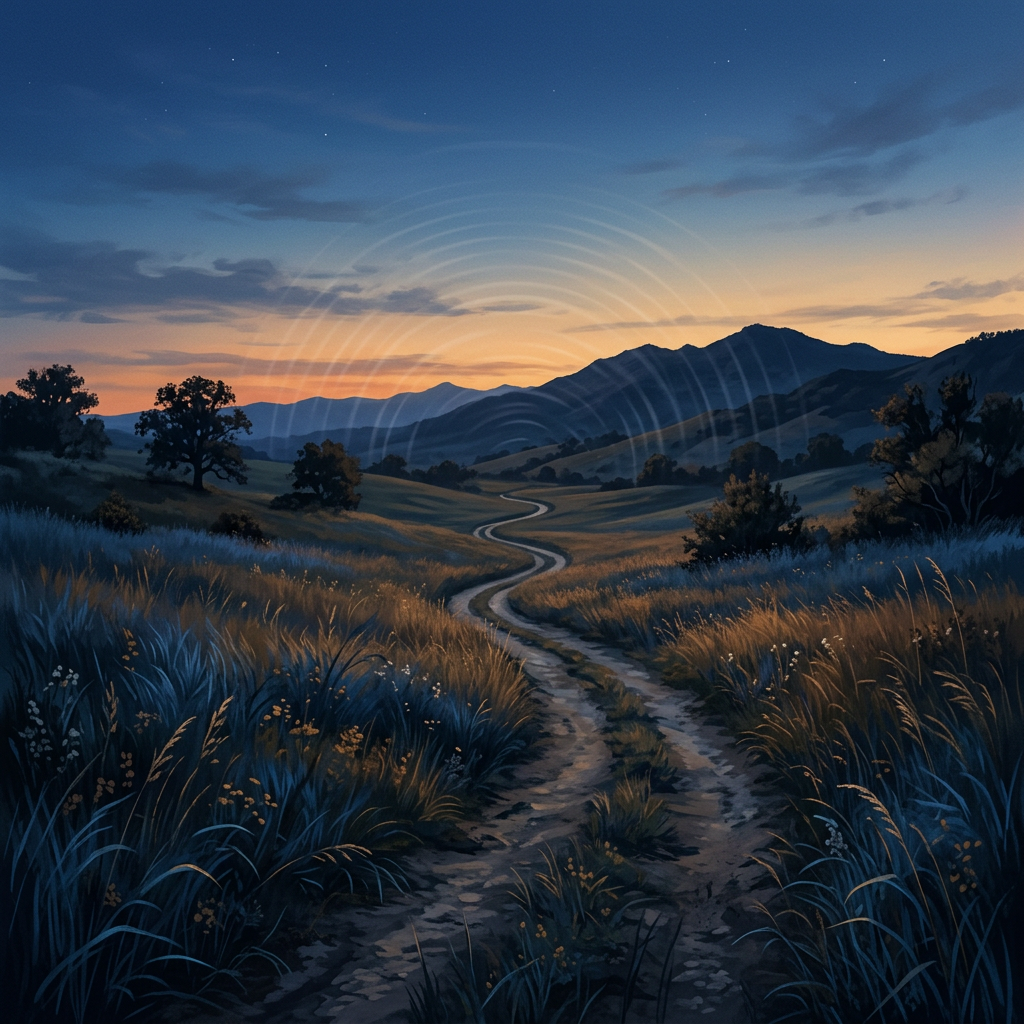
A winding path leads through golden grasslands toward shadowy mountains at twilight
“As the sun moves through Libra before crossing into Scorpio’s shadowed terrain, October asks us to trade politeness for truth. In the Northern Hemisphere, the days shorten and the light turns amber and low; below the equator, the world stretches open into spring warmth. Something in the air sharpens our attention, pulling us away from small talk and toward what actually matters. With Venus retrograde from the month’s opening days and Mercury joining her late in the month, this is no season for rushing. Let October be a place to look honestly at what you’re holding onto and what’s ready to be composted, released, or simply acknowledged.”
Keep in mind that the last Mercury In Retrograde of 2026 will happen October 24th-November 13th.
During this Mercury In Retrograde season, may we do a deep dive to look back into our rearview mirrors to examine where we were back zen, and then contemplate the direction we want to move forward inright tao.Check out the new podcast above and the original oldie but goodie below:
“As the sun moves through Libra before crossing into Scorpio’s shadowed terrain, October asks us to trade politeness for truth. In the Northern Hemisphere, the days shorten and the light turns amber and low; below the equator, the world stretches open into spring warmth. Something in the air sharpens our attention, pulling us away from small talk and toward what actually matters. With Venus retrograde from the month’s opening days and Mercury joining her late in the month, this is no season for rushing. Let October be a place to look honestly at what you’re holding onto and what’s ready to be composted, released, or simply acknowledged.”
Keep in mind that the last Mercury In Retrograde of 2026 will happen October 24th-November 13th.
During this Mercury In Retrograde season, may we rewind, reflect and remember the co-creative trails that we have blazed together already during this Year of the Fire Horse.
Please enjoy this newly created podcast version & the original 1st post galloping into 2026 by cicking on the links below:
Please check out the original post at the link below:
If aliens arrived tomorrow, what’s the first thing you’d ask them?
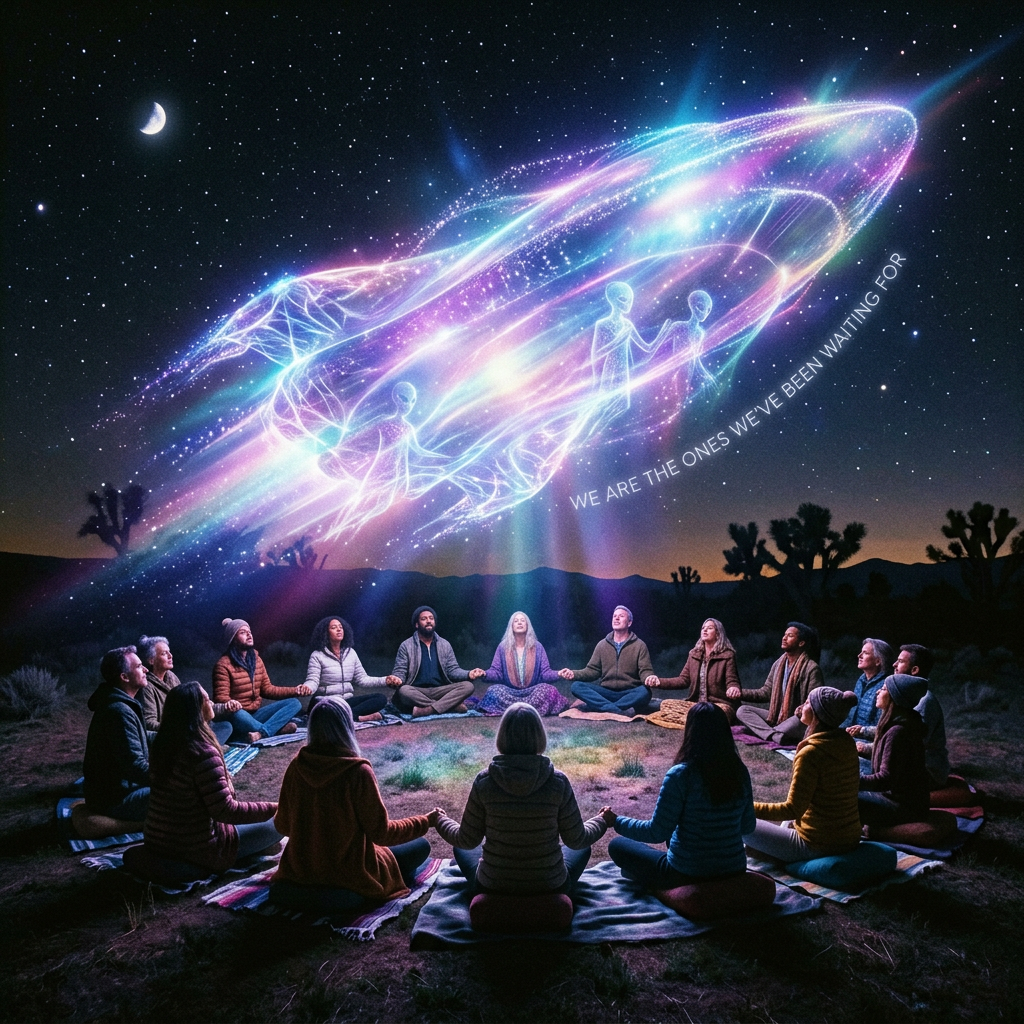
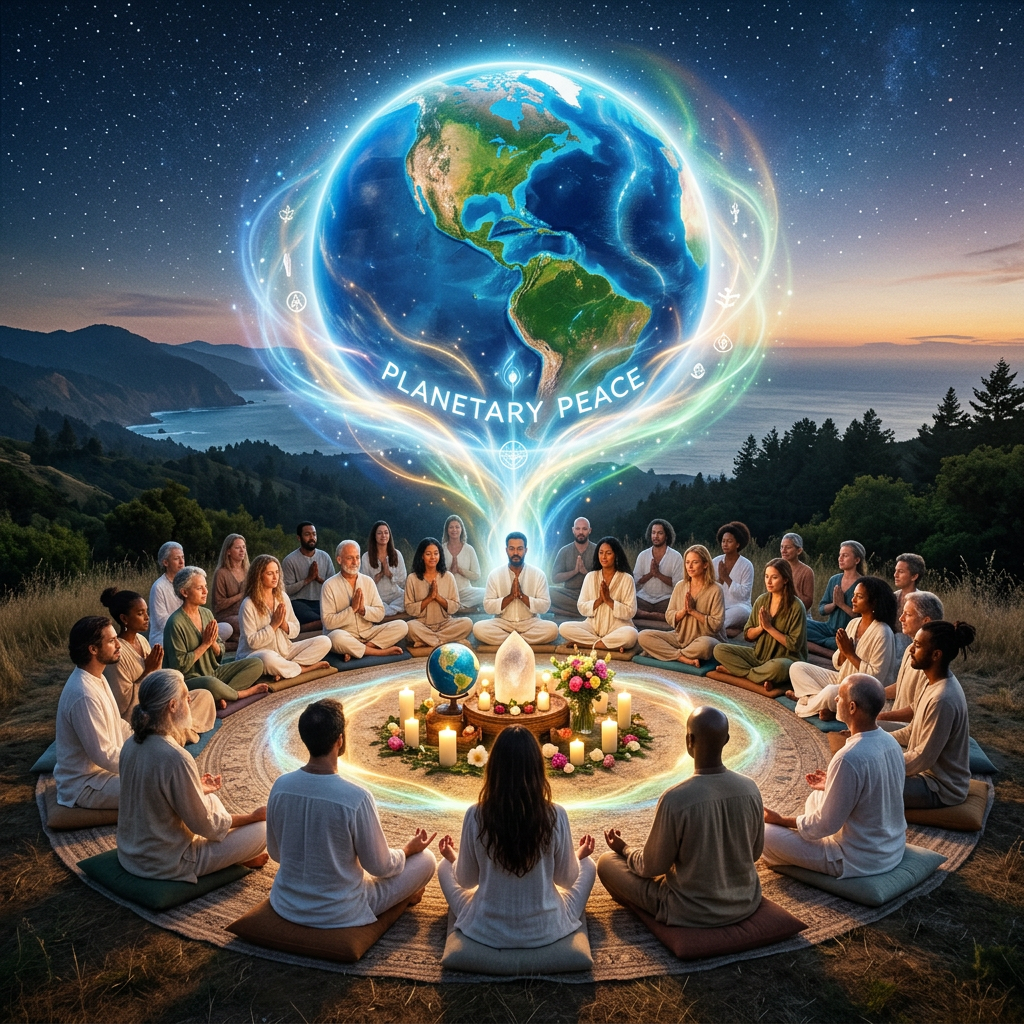
A circle of meditators gathers beneath a glowing celestial vision in the desert nightView all responses
In much the same way as the old Hopi saying asserts that we are the ones we’ve been waiting for; awakening to communication with ETs is a real perceptible experience intended for We The People.
That being said, they’re already here and have been around a lot longer than we have.
Akin to the end of the recent Steven Spielberg film, Disclosure Day, it isn’t about what I would ask them, it’s more about heeding their invitational callback by stepping into our power by stepping up to Cosmic Consciousness . . .
Listen.
And you can’t listen if you’re talking at the same time. It’s a cold hard fact of life.
Telepathy and empathy go together.
If we listen and are open to what the present moment has to communicate with us, then an interdependent form of coregulative and collaborative communication will take place.
Truly, a Harmonic Convergence, so to speak.
Or like encounters with animal spirits, this happens when fear is not present. Otherwise, they will leave us alone.
Besides, seeing animal tracks reveals that the animals are around; if not directly as evidenced by our field of vision. Same with ETs.
Many of you already know what they would say to us:
As in, our future selves only exist so long as we survive and make the quantum leap into our next level of consciousness by walking into the reality of planetary and universal peace.
What we do to one strand affects the whole Web of Life, as American Chief Seattle said.
Or like the story told about the ET that responded to the late Army Lieutenant Colonel Philip J. Corso’s query, “what’s in it for me?”.
To Wit: the ET responded by saying, “a new world if you can take it.”
May All Beings Be Free From Suffering And Awaken To Planetary & Universal Peace. And So It Is And So It Will Be.
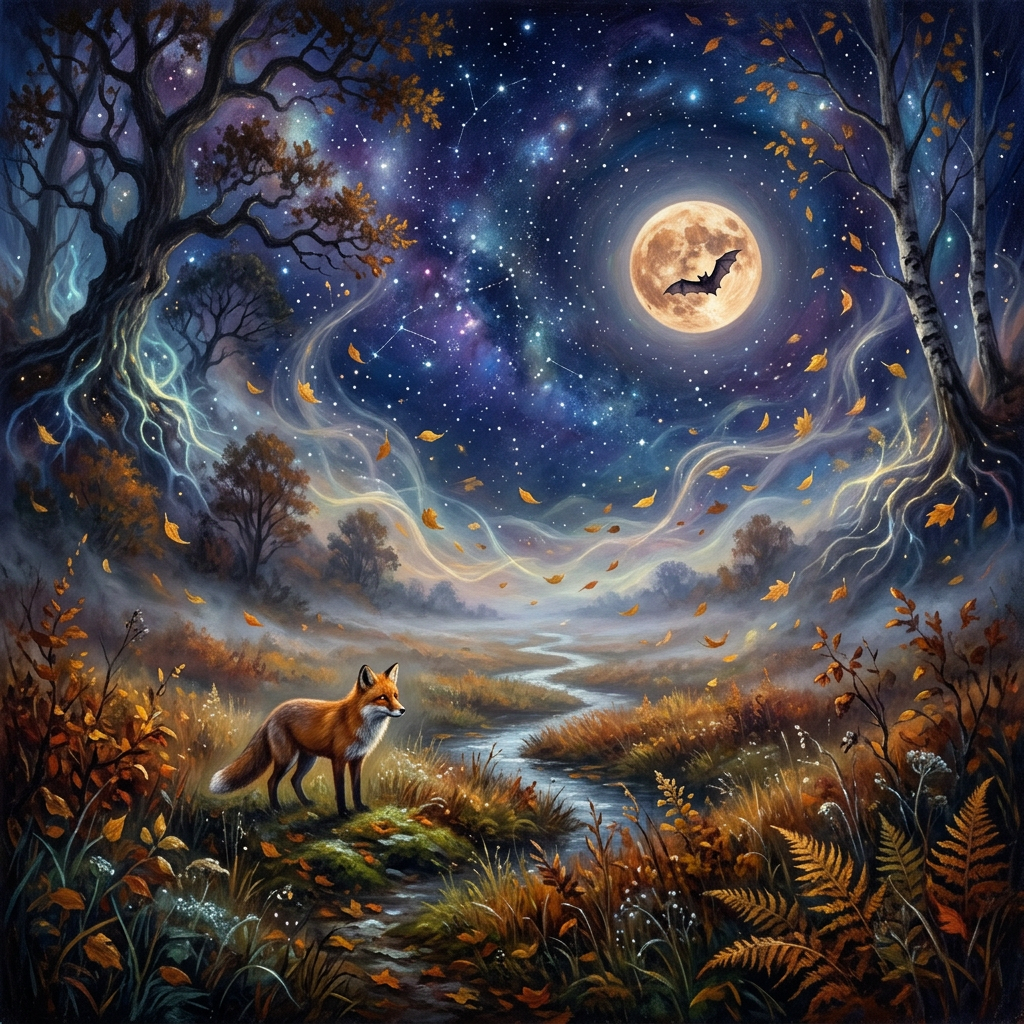
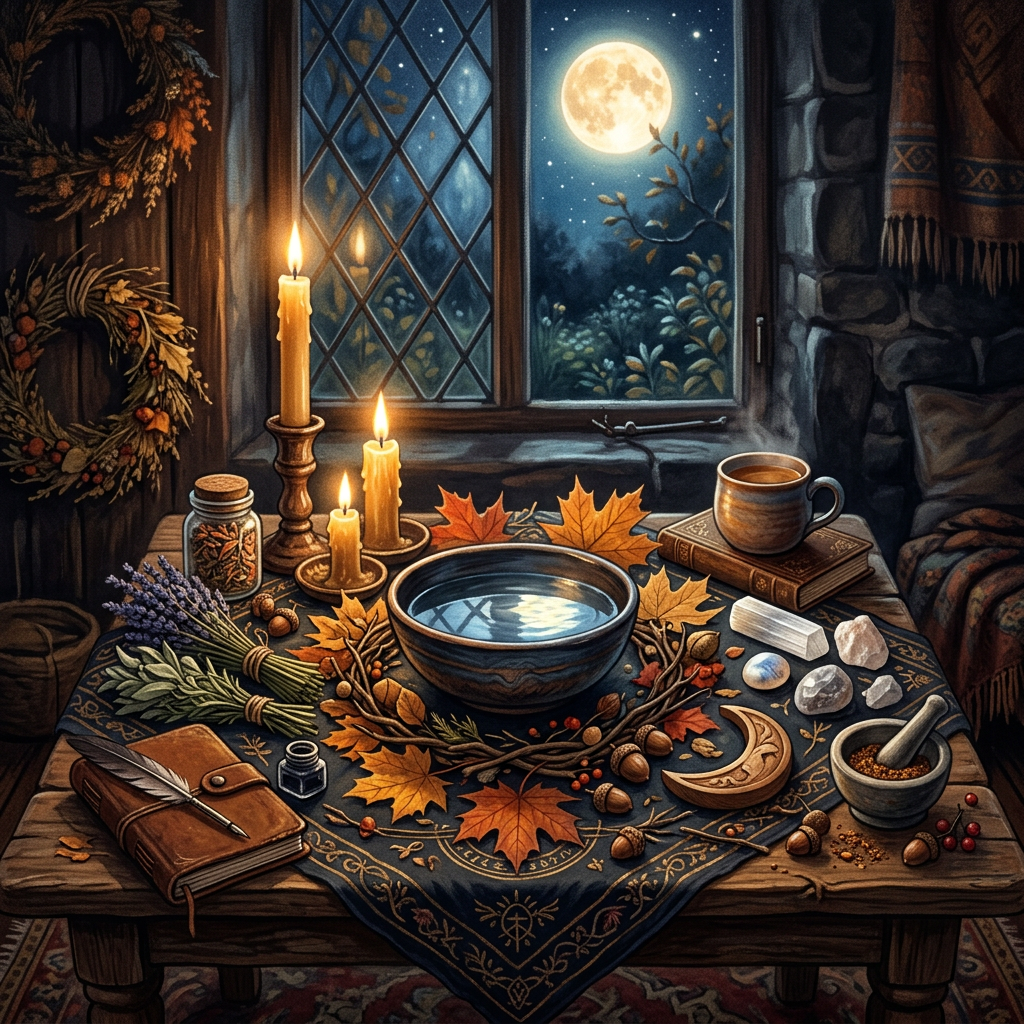
Candles, herbs, books, and autumn leaves create a cozy moonlit ritual scene.
Energetically, Libra season officially kicks off on September 22nd, which is also the date of the Autumn Equinox. Libra’s seasonal imprint will last till October 23rd.
Coming right up, a Full Harvest Moon on September 26th honors sacred ancestral rituals like moon-viewing dinners outdoors, harvest blessings, candle-lit gratitude circles, and a Mid-Autumn Festival with mooncakes.
Looking ahead to the New Moon in Libra on October 10th, balance and harmony are dually noted.
Are you feeling driven to be nice rather than speak your truth authentically?
Are you taking an honest look at your deeper feelings and sharing them when the situation calls for it, despite of what is expected of us by others?
As we blaze trails further into this Year of the Fire Horse, ponder how the energies around the next Full Hunter Moon on October 26th may affect a personal sense of safety that could depend on the need for stability.
Remember that an awakening of Fire Horse’s archetypal energies reveal greater movement, decision, freedom and courage so that we can effectively explore unknown frontiers.
What old narrative have you noticed fading away into the rearview mirrors of yesterday?
Have you observed healthier relationships emerging and leaving you feeling a more perceptible sense of emotional, financial, and spiritual rebirth?
Do you see people embodying love, empathy, compassion and kindness?
Although this moon goes by many names, the name Hunter Moon was inspired by the hunting of game animals like deer, turkey and pheasants in mid to late autumn.
Cooler temperatures also make it easier for storing and preserving meat for the winter. Falling leaves and more moonlight allows for better vision to see and hunt animals at day and night because brush is not as thick, making tracking and hunting easier.
The energies of Fox are also associated with this time of year. Fox reflects the art of camouflage, which also reflects adaptability and shapeshifting. Meditation on Fox can help you fade into the backdrop, and blend into your surroundings without being noticed.
Around this full moon, connections with Taurus can be seen as a friendly reminder to accept that change is a natural part of life. Regardless of a Bull or Bear market, our own sense of self-respect does not really come from the coins we circulate in this world of 10,000 things, if you’ll pardon the animal spirited financial pun.
Truly, self acceptance for who we really are does make it easier to see peace and tranquility in the outside world.
In this blog, we have been exploring self-care rituals and strategies.
Full Moons are certainly a powerful time to reinforce self-care rituals and strategies.
Just as an example, consider writing down what needs to be released on a small piece of paper, and then burn it down safely outside under the moon. At this time, fire rituals can be a powerful way to release and let go of whatever we need to let go of in our lives that no longer serves us to clear space for what’s next.
Additionally, the last Mercury in Retrograde of the year will happen on October 24 to November 13, 2026
Mercury in Retrograde aka The Twilight Zone is a good time to look into the rearview mirror, and take a closer look at what issues we may not have resolved in the past yet.
Speaking of reviewing rewiring revolutionary energies, it’s always a good idea to check your own inner state of consciousness as you navigate life’s everyday aches, pains, pleasures, situations and moments. Remember that you can’t feel good when you’re feeling bad about feeling bad!
And then we can reexamine the direction we need to go so that we can move forward to see from new vistas. When we change the way we look at the world, the world changes the way it looks right before our eyes.
The Samhain will happen on October 31 to November 1, along with other thinning of the veils energies falling on All Saints’ Day on the 1st, and All Souls’ Day & The Day of the Dead on November 2nd.
This is a powerful time to honor our ancestors who have passed on and tune into the spirited energies that will be more perceptible during this time where the boundary between the spirit & material realm becomes less concrete and more permeable.
Meditation on the medicinal energies of Bat can awaken transformation through the dark cave of death of the old self, and resurrect the process of rebirth into who you are becoming.
What messages does spirit have to say to you about this?
Keep in mind that playing around with wearing masks can stimulate movement through portals into consciousness, and awaken sacred connections with animal spirit guides like Bat.
Are you aware that a growing body of brain science has consistently shown that brainwaves do change during this extra or non-ordinary states of consciousness?
People who become consistent meditators often learn how to change their brains, their DNA, and their general experience with life. That’s why it’s really hard to go back to the old ways once you awaken to these novel neuronal pathways. This transformation is Alchemy.
It can be enticing to get too caught up in the material world or the spiritual world. This is why our ancestors came up with the mantra of walking with one foot in spirit, one foot in ground.
Our ancestors honored the thinning of the veils; where the lines between the spirit & material realm can be perceived as thinner. That’s why it can be harder to differentiate between the 3-D & spiritual realms during this season.
Costumes, including masks are traditionally worn during the thinning of the veils period. From a consciousness perspective, wearing masks can awaken shapeshifting, transformation, and portals into other alternate or imaginative realms.
Meditation on the archetypal energies of the Shaman awakens new pathways revealed in our field of vision. The capacity to acquire and access novel ways of thinking are key dynamics of Growth Mindset. Meditation on shamanism reveals extraordinary, non-localized and linear free states of consciousness.
May All Beings Be Free Of Suffering and Awaken To Planetary & Universal Peace,
As we take a deep dive into the season of Virgo, may its grounding energy create a sense of order, structure and routine amidst the plethora of chaotic tidal waves manifesting in the theatrical 3D realm.
Virgo season started on August 22nd and will last till September 22nd; marking alignment with the equinoxes taking place on Planet Earth at that time.
When body surfing the waves on the crest of the last eclipse of the season on the Full Sturgeon Moon on August 28th . . .
Keep in mind that Full Moons during Lunar Eclipses are like Full Moons on steroids.
Remember that, during these rapidly shifting ebbs and flows, meditation on resiliency is a trait that humans can awaken with the energy medicine of Sturgeon.
If you can dig on rocks & gemstones…it’s always a good idea to recharge them outside under the Full Moon cycle which lasts a few days before and after the actual Full Moon.
Perhaps a little sea saltwater bath to cleanse and energize them at night during your sleep cycle will support your soul development during the Dreamtime.
Are you noticing how these powerful energies are triggering emotional releases, helping unearth hidden truths and perhaps serving as catalysts to breaking toxic patterns or relationships?
Eclipse seasonal energies and their aftershocks can be felt consciously by a growing body of people; as well as feel powerful and intense.
May we surf these energies so as to feel inspired to let go of stagnant habits, emotional baggage, and limiting beliefs.
And yet, it’s as if Great Spirit prefers providing a gentle nudge to return to our soul purposes.
Truly, it can be hard to perceive that in the throes of Climate Change, not to mention the militaristic and fear mongering cabal that still clings to a Planet of the Apes mindset.
Make no mistakes about the truth that humans are capable of creating beauty and showing our better angels with our humanity.
But we all know the factions of hidden hands that repress free and clean energy, shoot down ET crafts, and then lie to the general public that human made, reverse engineered technology are somehow a demonic threat from another planet.
Besides, people who have been reading this blog know that I don’t demonize demons. Inter-dimensional beings, like demons, don’t fly in spacecrafts or require clean up crews or autopsies after crashes because they aren’t sentient beings.
But if you’re listening to the raving lunatics that are looking for some false flag holy war, then that’s exactly what you’ll hear parroted by the likes of the current American Yale Law School Grad & Vice President from the MidWest.
A New Moon in Virgo on September 11 awakens feelings of safety relating to order and clarity, even in emotions. Tis the season to get organized, and get down to the nuts and bolts of everyday business affairs.
Try being more tolerant and accepting of life’s imperfections. It is better to trust life and let it follow its own path. Not everything must be according to our expectations.
The arrival of the Autumnal Equinox in the Northern Hemisphere or the Vernal Equinox in the Southern Hemisphere will be on September 22nd.
Depending on your planetary location, movement towards cooler temperatures and shorter days or warmer temperatures and longer days will be playing out, respectively.
Energies in the Southern Hemisphere will intensify till climaxing on the Summer Solstice; while Northern Hemisphere energies will turn more yin-ward till reaching their zenith on the Winter Solstice.
Near the end of September, a Full Harvest Moon will happen on September 26th.
Native American and Asian traditional activities include moon-viewing dinners outdoors, harvest blessings, candle-lit gratitude circles, and a Mid-Autumn Festival with mooncakes at this time.
Spending time in meditation, focusing on positive energy, abundance, hope, etc., will be incredibly powerful and healing, not just for ourselves, but the entire planet.
Meditating in a sacred space on a consistent basis builds a growing energetic morphic field.
Group meditation in this way amplifies a field of collective energy.
The power of every individual and groups deepens and heightens our work with cocreative energies that are in alignment with planetary and universal peace consciousness.
Everyone has bias, and of course this is part of the human condition. It isn’t about setting aside our biases, beliefs or judgments.
Rather, it’s about moving beyond them.
Perhaps humanity’s violent and militaristic tendencies are waking us up.
Wars, plotting and scheming, abusive language, temper tantrums and micro-aggressions or even giving someone the cold shoulder are stale old dysfunctional ways of relating to each other that are ready to die and burn in a funeral pyre.
That’s why there is a growing trend of non-violent communication workshops out there so that we can wake up in the ways we relate to each other.
We don’t need to draw our swords and go to war with each other.
Keep in mind that changes in ages are like changes in seasons.
Everything is ephemeral and transitory. And yet, all life is energetic and sacred nonetheless.
Have you noticed the squirrels, and chipmunks scurrying about, and foraging like mad in their preparation for winter stockpiles?
It must run in the family, because groundhogs are gorging before they go to sleep when consistently colder temperatures arrive.
I saw some wild turkeys on a hike the other day, and was reminded of their tendency to steal the winter storage cache of squirrels.
Perhaps they weren’t tickled about turkey’s thievery. But in their industry, squirrels don’t seem preoccupied with vendettas or the dark and stormy days ahead.
We can stand to learn from them in that way; as in how squirrels balance work and play.
May all Beings be free from suffering and awaken to Planetary and Universal Peace,