Podcast Episode: New Published Material Revisited

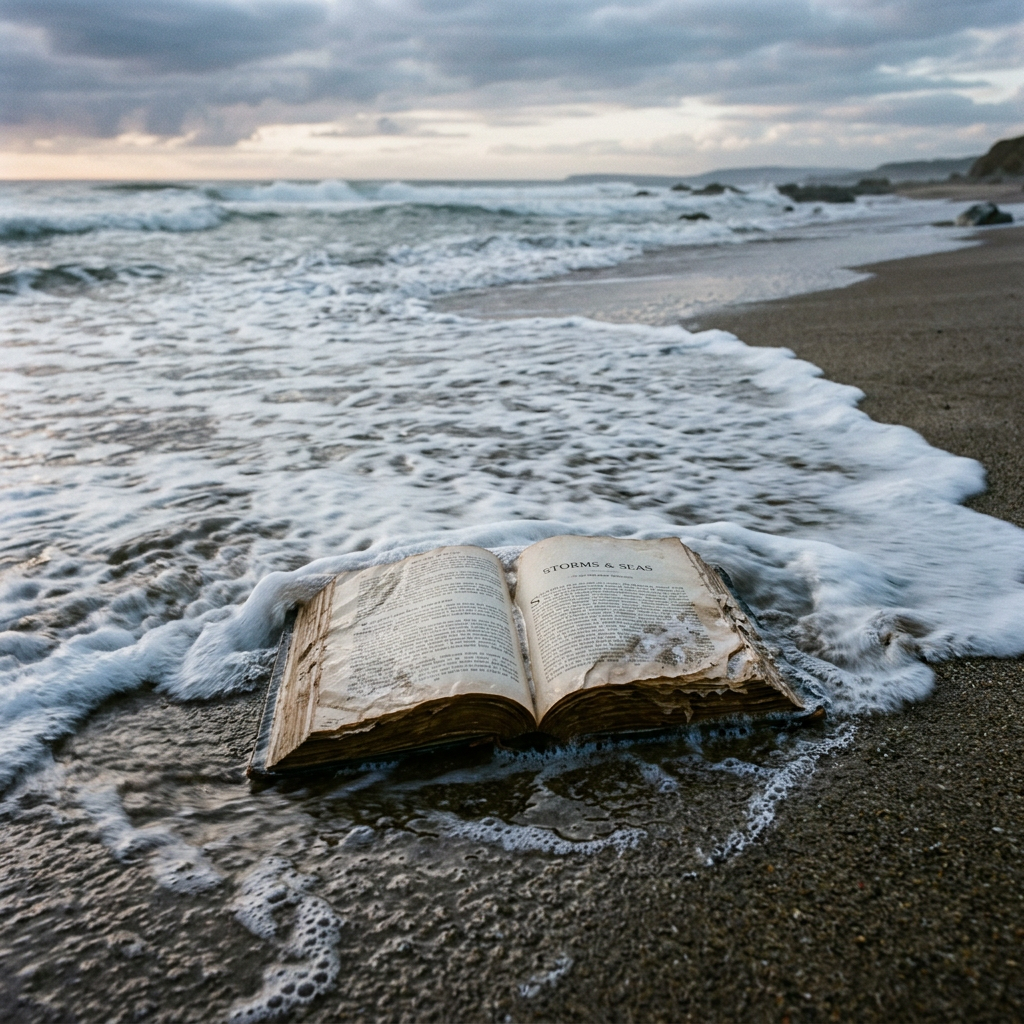
Open weathered book titled 'Storms & Seas' on wet sand with waves washing over it
An old, worn book is partially submerged as ocean waves wash over it on a beach.

Hi Folks! Mercury in Retrograde goes back direct today. As my wise old spiritual counselor Leo would say, keep in mind that the mental fog tends to lift & clear up over the next 10 days or so. Also, be patient with left brain cognition & machines as they come back online during this time. In the meantime, please enjoy this new AI 2 person podcast as an appetizer for my newest book:

Ladies and Gentlemen…Introducing AI Podcast Characters Pip & Mara On Ari’s Multimedia Writing:

Pip: Climate grief, ancestral memory, and the kind of soul wounds that don’t show up on an X-ray — Classroom Mothership Earth is not pulling punches this week.

Mara: Ari Joshua Bouse has been publishing through Edge of Humanity Magazine, and the work lands squarely on climate change, trauma, and what we carry from those who came before us. Let’s start with the new published material and what it’s actually doing.

New Published Material

Pip: The through-line across these pieces is a question worth sitting with: what does climate change cost us emotionally, spiritually, and across generations — not just ecologically?

Mara: The series is titled “A Novel Read into the New Shorelines of Climate Change,” and the post announces it plainly: “Please see my newly published writings via Edge of Humanity Magazine.”

Pip: That framing — new shorelines — does real work. Shorelines shift. They don’t vanish cleanly; they encroach. Using that as a metaphor for what climate change does to inner life as much as coastline is a choice worth noticing.

Mara: The series spans three distinct pieces. The first is a poem called “Overcoming Deep Traumatic Soul Wounds” — which puts psychological injury right alongside environmental upheaval, treating them as the same conversation.

Pip: Which they arguably are. The literature on climate grief has been making exactly that case for a decade, and here it’s arriving as verse rather than a journal abstract.

Mara: The second piece, “Weathering Changing Weather Patterns,” shifts register slightly — the title itself is doing double duty, the literal and the internal sitting on top of each other. And the third, “Remembering Our Ancestors,” is another poem, this one pulling the lens back to lineage and what prior generations understood about living with a changing earth.

Pip: So you have trauma, adaptation, and ancestral knowledge — three movements that together make something closer to a full emotional map of the climate moment than any single essay could.

Mara: All three sit inside a larger project that Edge of Humanity Magazine is running under that “New Shorelines” banner, which suggests this isn’t a one-off but an ongoing body of work finding its public form.

Pip: Poetry as climate literature — not the most obvious delivery mechanism, but possibly the most honest one.


Mara: The shoreline metaphor keeps expanding the more you sit with it — what’s eroding, what’s being redrawn, what we’re trying to hold onto.

Pip: Next time, more from the edge. Worth watching where those shorelines move.

Please enjoy the previously published poetry excerpts from my latest book at the link below:
Podcast Episode: Recognition Poem

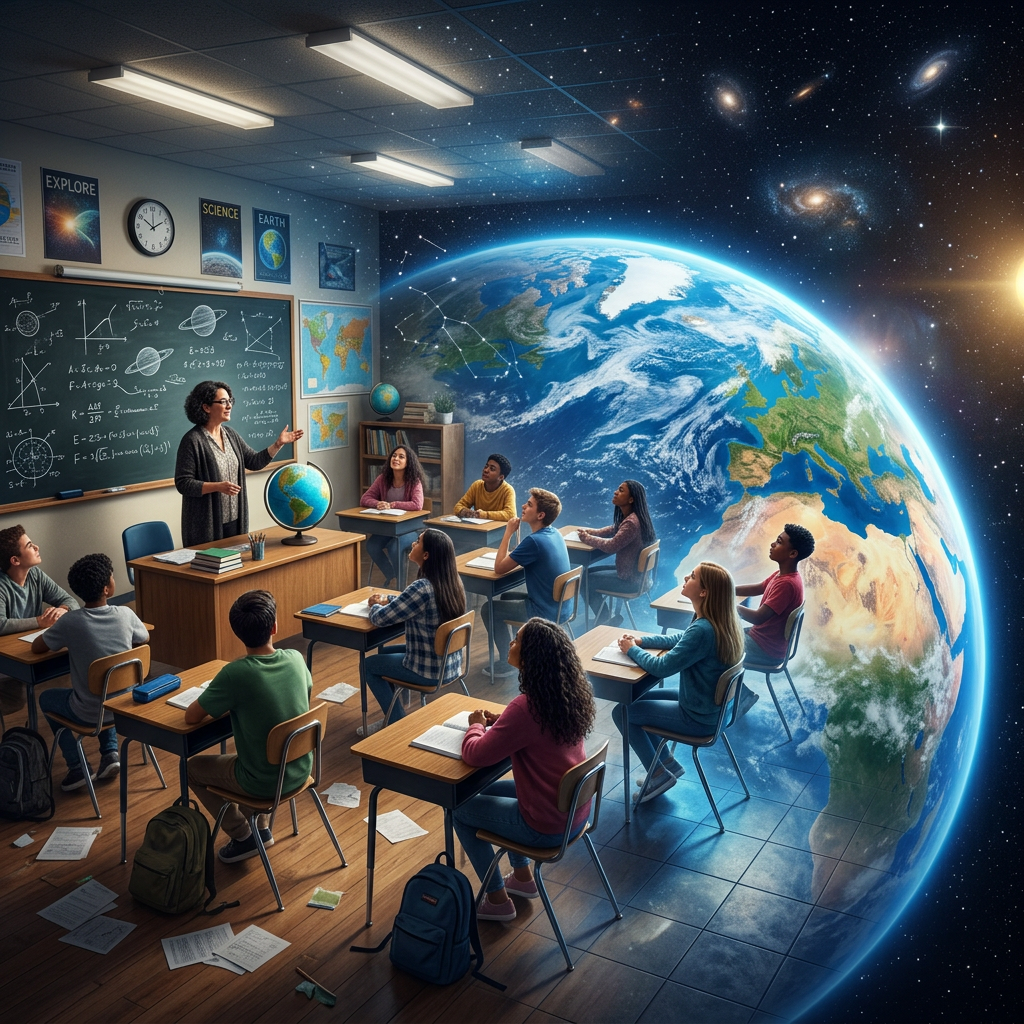
Classroom with students and teacher, Earth and space background blending with room
Students engage in a science lesson with Earth and space visuals surrounding them.

Pip: Classroom Mothership Earth — where the self-help mantra, the bumper sticker, and the geopolitical aside share a page without anyone blinking.

Mara: Today we’re looking at work from Ari Joshua Bouse — specifically a poem that moves from inner recognition and self-talk all the way out to questions of disclosure, technology, and what we owe each other.

Pip: Let’s start with the poem itself — and what it means to truly recognize yourself.

Recognition Poem

Mara: The post opens with a premise about self-perception: that recognition — of yourself and of others — is the starting point, and that self-criticism quietly erodes the ground you stand on.

Pip: The poem names fear as the specific mechanism. Here’s the line that anchors it: “Fear of consequence avoids taking responsibility.”

Mara: That’s the hinge the whole piece turns on. If fear of what follows keeps you from owning what you’ve done, you’re not just stuck — you’re actively building the wall higher.

Pip: And the poem doesn’t let the outside world off the hook either. It moves from inner work outward — through what it calls cognitive distortions, through “Us and Them segregations,” through the idea that karmic consequences exist even when they go unseen and unheard.

Mara: There’s a line that earns its place quietly: “A Higher quality of respect comes from feeling safe to learn, even through peaceful and non-violent forms of tough love.” That’s the connective tissue between the personal and the communal — safety as a precondition for growth.

Pip: The poem then takes a hard turn into territory you don’t usually find between a self-talk mantra and a Latin etymology lesson — and yes, it notes that discipline traces back to the Latin root for teaching, which reframes the whole concept.

Mara: The outer section addresses technology, fossil fuels, and what it calls Full Disclosure — the idea that taxpayers hold a sovereign right to know how their money works. The bumper sticker image is the vehicle: imagine the Air Force holding a bake sale, and then imagine further until there’s nothing left to fund.

Pip: It’s a rhetorical escalation — start with the absurd image, then keep walking until the absurdity becomes the point.

Mara: The closing lines bring it back: “the spotlight of heart-centered mindfulness lays the cards on the table to call out the bluff.” Awareness, the poem argues, is itself a form of accountability.

Pip: Recognition as the first act of honesty — toward yourself, toward others, toward the systems you live inside.


Mara: The thread running through all of this is that seeing clearly — yourself, your fear, your world — is where any real change begins.

Pip: Next time, we’ll see what else comes into focus.