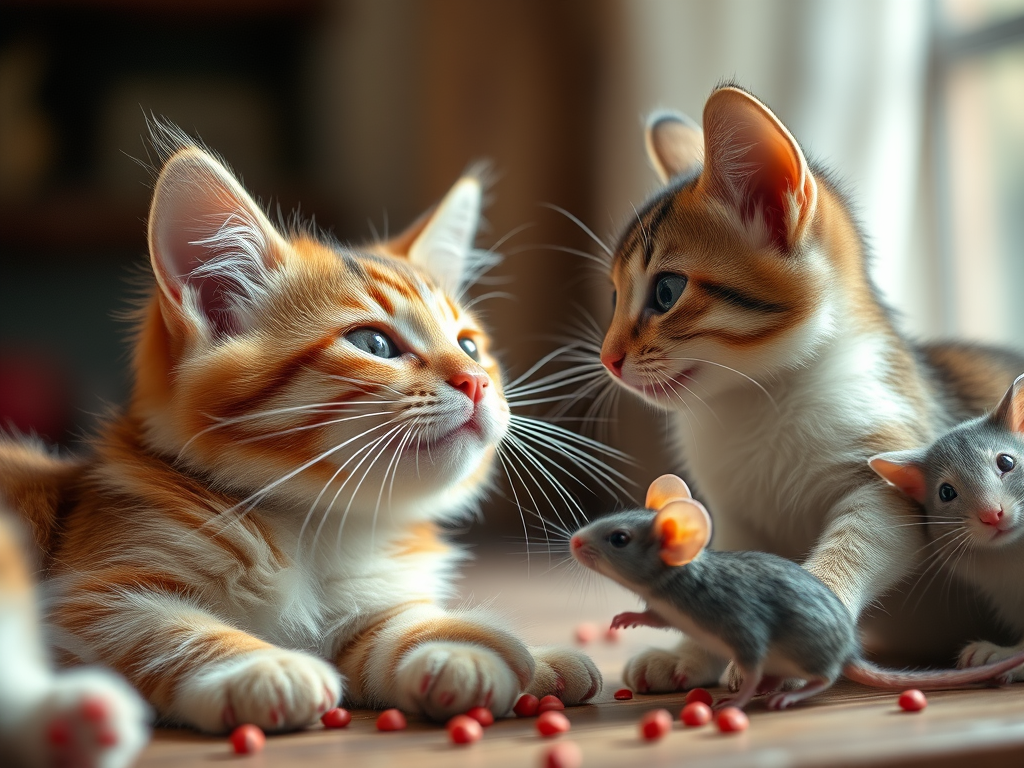
Cat & Mouse Is What I Do

Daily writing prompt
Do you play in your daily life? What says “playtime” to you?

I remember when I embarked on an adventurous family reunion in Italy many years ago, and one of my cousins looked at me, and said, “Ari, is it fun in there?” She was referencing my mind, and made this comment after I cracked a barrage of puns, and other theatrical wit. Perhaps if my Italiano was better, then I could have disguised my cornball humor so that it would have read like a foreign language.

And then many moons later, I worked for a new School Principal who brought with her a book called Fish Philosophy into the school community we worked in together at the time. As our new administrator, she built in Fish Philosophy into our staff professional development to enact cultural norms encouraging us to “choose your attitude” and “make their day.”

The theme of Fish Philosophy is simple and was adopted from the famous fish market in Seattle, where the workers throw fish at each other, customers and have fun doing it. Imagine that . . . work and play going together, and that we have a choice in whether we do that or not in the school of life. Before I even read any of the book, a new coworker came up to me after a work related training, and made it a point to tell me that he had started reading the book, and said that I was a good role model of the book’s theme.

https://www.pikeplacefish.com/about

Since before I came out of the womb, I’m sure the cat and mouse part of my personality wasn’t part of my hidden self. As a boy, my mom said that I liked it when she read to me in the womb. Truly, I was probably already acting out the characters that she was reading to me. Most of the trouble I got into in school by teachers, and later in sports by coaches was my clowning around with people, and finding parody and jest in the everyday mundane encounters.

For example, one of my favorite coping strategies to introduce to kids (and adults) is the idea of imagining that the business of life is like playing a video game in your head. It’s been since I was in Middle School that I was a regular video game player, but when I came across that strategy, it resonated in me and many other students I worked with over the years. The Tai Chi classes I have taken also emphasized and embodied the idea of playing with form.

These days, most people expect to be entertained, and typically by someone or something else that they perceive to be outside of themselves; as in an external object of affection, like a pacifier. But the real trick is to discover ways to play with life. As other people take notice, it does tend to become contagious.

Just as an example, I like to play around with mindful breathing during a workout or exercise routine because it brings you into the present moment. Breathing mindfully also makes the workout or exercise routine feel less like work, exercise or a routine for that matter. And when I play my guitar, that’s all I’m doing is playing. It’s more fun that way.

The Power of Transitional Objects Like Stuffed Animals, Security Blankets, etc.

Daily writing prompt
Describe an item you were incredibly attached to as a youth. What became of it?

Compliments of AI, the images above capture the sentiment of the time when my mom and I got in a power struggle when I was about five years old. Like Linus from the cartoon Peanuts, I brought my blanket (blankie) everywhere, and was about to over my bring it into the bathroom with me. Typically, my mom was good at what we call in Therapeutic Crisis Intervention (TCI) ‘dropping the rope’, and avoiding power struggles. But this time, mom wasn’t going to budge, grabbed what psychologists today call ‘transitional objects’, and tried to pull my blankie away from me.

Given my strong will and formidable attachment to this object, I was having none of it. Thus, it didn’t take long for the blanket to part like the Red Sea, and tear right down the middle. Immediately, I started crying and so did my mom. After we calmed down, and processed the incident; mom apologized, told me how bad she felt and then expressed that she was really worried about me trying to take my blanket to school, getting in trouble and being made fun of by my peers. I don’t blame her; especially because I had already been profiled young, and had to go to a special purpose Preschool program to rework my difficult behaviors. She remembered the look they gave her when I showed up for the first day of the new Preschool with my cowboy guns in holsters. And then the staff turned towards her and said, “we don’t encourage guns in school.” Given that experience, her desire to help- and that I had already got into trouble with another peer on Kindergarten’s orientation day, I can see how she got sucked into this power struggle with me.

Looking back, I remember being struck with how rigidly she had set the limit; seemingly abruptly, and then held her ground without budging. Mother and I revisited this episode many times over the years, and would always laugh about it. The storytelling was a precursor to my journey in meditation, our relationship with our attachments, and how we approach working with them. This experience also informs how we can more effectively co-regulate with each other, and navigate transitions between structured, unstructured, preferred and non-preferred activities. Besides, the blankie was already about to set itself on fire, and was no longer salvageable. The agreement was that I would get a new blanket to replace the old one but under the expectation that the new one would not be going to school with me. During my career as a school social worker, I have told this story many times to students, parents, staff and coaches when situations like these have come up. Like the old T’ai Chi Master Professor Cheng used to say, learning to be human isn’t always easy, and is a lifelong developmental process; our attachments notwithstanding. Humor gets us to look at things differently, and is a powerful change agent in the transformational process of relaxing and letting go of our attachments.

Of Mice and Humans

Pole-vaulting over mouse turds exacerbates a foul ball old sport . . .
Paying careful attention to Life’s details is good medicine.

But be careful of analysis paralysis.

In chewing every piece of what you eat –
You might get trapped.

When bitter digestion arrives, please remember to stomach with grace.

Mouse is an embodiment of organizing and categorizing . . .

Have you filed away some sort of knowledge into a compartment –
for further re-examination down the line?

Remember that unnecessary hoarding and anxious busyness weighs us down.
Sometimes giving away what we cling to lightens up our load.

Is your energy too scattered by trying to do too many things?

Rather than getting lost in our modern world’s distractions and shake-ups –
Perhaps we delve into the largesse of spirit . . .

Tending our soulful gardens and examining our roots . . .

Do you see we are one diverse divinity connected  in Unity?

Or do you see us as doomed demons falling aimlessly down a black hole?

Infinite wisdom is revealed through scrutinizing self-reflection.
Being quiet and unobtrusive is helpful to that process . . .

What is going on right in front of you that was missed before?

Remember to stay alert, make positive interpretations and see the silver lining . . .
While sitting with the present moment with Love and Truth as our ally.

See you further on down the trails,

Ari